The traditional blueprint for multi-generational wealth preservation is fundamentally broken. For decades, global ultra-high-net-worth (UHNW) families operated under a simple, geographically centralized directive: find a singular, stable financial sanctuary, consolidate all liquid and illiquid holdings within its borders, and trust that domestic legal and political institutions would protect that legacy in perpetuity.
In the macroeconomic reality of 2026, this highly concentrated approach is no longer an asset preservation strategy. It is a structural single point of failure.
We have entered an era defined by systemic fragmentation, weaponized financial networks, rapid regulatory shifts, and accelerating de-globalization. As economic blocs decouple and traditional tax havens undergo structural transformations under pressure from international coalitions, the concept of a single “safe haven” has become obsolete. Private capital can no longer protect itself by simply moving from location to location. Instead, it must permanently restructure.
The world’s most sophisticated private holdings are undergoing a quiet, structural revolution: the transition from centralized single-hub structures to Polycentric Family Office Architectures. Rather than concentrating governance, treasury, tax optimization, and direct capital deployment within one territory, these networks unbundle key structural components and distribute them across an interconnected matrix of specialized jurisdictions.
This report provides an independent, deep-dive analysis of the mechanical, legal, and operational frameworks required to engineer an unyielding, multi-jurisdictional family office architecture. By analyzing the structural interactions between premier financial engines—such as Hong Kong, Singapore, Luxembourg, Delaware, and the United Arab Emirates—this treatise details how private capital can decouple risk from geography, minimize compliance friction, and transform global fragmentation into an absolute strategic advantage.
Part I: The Fallacy of the Singular Haven and the Rise of Functional Unbundling
1.1 The Vulnerability of Centralization
When a family entity houses its master trust, its active investment holding engines, its operational staff, and its liquid treasury within a single geographic territory, it links its long-term survival directly to the domestic policy, foreign relations, and legislative whims of that individual state.
This localized exposure manifests in three critical failure points:
- Regulatory Shock: Sudden, unilateral shifts in domestic tax codes, beneficial ownership disclosure laws, or local economic substance requirements can render a long-standing corporate vehicle non-compliant or prohibitively expensive overnight.
- Geopolitical Exposure: Changes in international alliances, cross-border trade restrictions, or foreign asset-freeze mechanisms can instantly compromise capital located within a jurisdiction that becomes politically exposed.
- Operational Bottlenecks: A singular hub may excel at wealth preservation but lack the localized corporate tools, venture ecosystems, or deal flow access necessary to deploy capital into high-growth sectors with high velocity.
1.2 The Principle of Functional Unbundling
Polycentric architecture rejects the idea that one jurisdiction can serve all corporate purposes perfectly. Instead, it applies the framework of Functional Unbundling, dissecting the family office infrastructure into distinct, modular layers and assigning each to the specific global jurisdiction best engineered to handle that unique task.
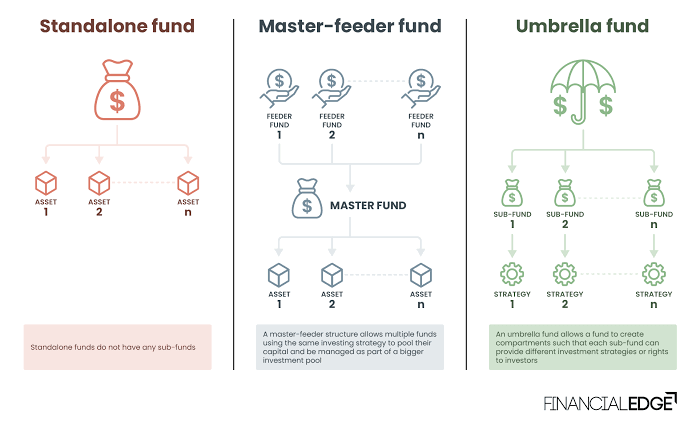
The matrix breaks down into four operational tiers:
- The Governance & Stewardship Hub (The Anchor): Optimized for long-term legal predictability, absolute structural perpetuity, and neutral cross-border dispute resolution. This node houses the master trust structures and the overarching family council.
- The Treasury & Liquidity Center (The Buffer): Optimized for macroeconomic stability, non-bank physical asset storage, sovereign debt allocation, and frictionless international currency movement.
- The Growth & Capital Deployment Engine (The Alpha Node): Optimized for swift commercial execution, direct integration with private tech/venture ecosystems, proximity to public equity IPO pipelines, and favorable capital gains exemptions.
- The Operational & Legacy Outpost (The Satellites): Optimized for localized operating businesses, regional real estate holdings, structured philanthropy, and domestic compliance ring-fencing.
By untangling these layers, a family office can maintain its ultimate control center in a highly stable, neutral environment while placing its active investment engines directly within high-growth regions. If one node encounters local geopolitical or regulatory volatility, the remaining hubs remain unaffected, shielding the core wealth from systemic contagion.
Part II: Deep-Dive Case Studies in Polycentric Structuring
To understand how these concepts function under operational stress, we look at three distinct case studies of families navigating cross-border challenges via multi-hub engineering.
Case Study 1: The GCC Sovereign-Connected Merchant Dynasty
Background
A prominent Gulf Cooperation Council (GCC) merchant family managing $1.8 billion in assets. Historically, their capital was heavily concentrated in liquid US fixed income, prime London real estate, and regional energy infrastructure. Driven by rising regional tensions and structural diversification mandates, the family required a gateway to alternative energy supply chains and advanced manufacturing sectors in East Asia, without relinquishing their core sovereign buffers.
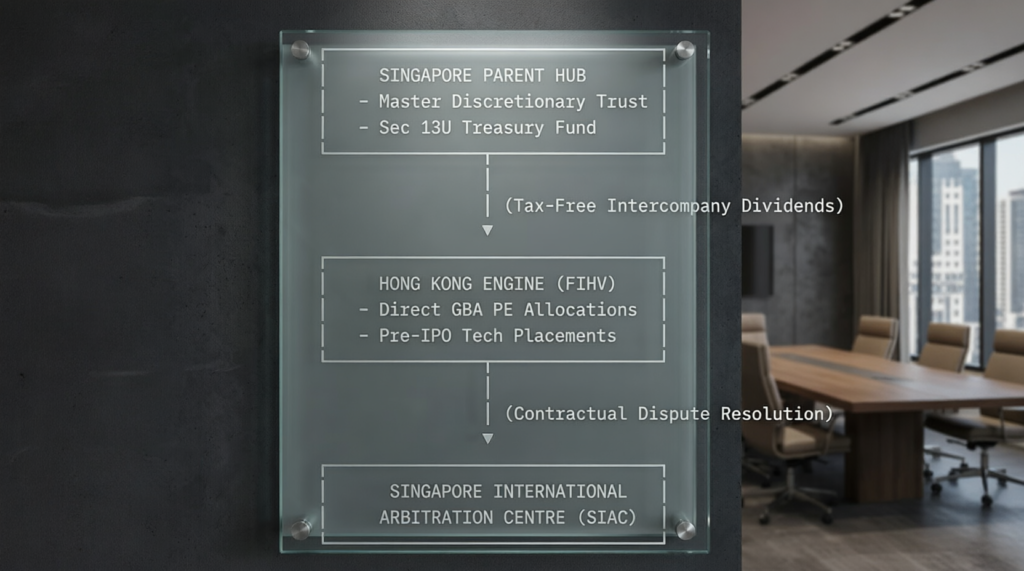
Structural Approach
- Singapore: Established a Master Discretionary Trust and Global Treasury Center under a Section 13U enhanced-tier fund incentive scheme. This node holds the family’s defensive reserves, sovereign bond portfolios, and physical precious metals stored in a highly secure, non-bank private vault system.
- Hong Kong: Launched an agile Family Investment Holding Vehicle (FIHV) to execute active direct investments. This vehicle interfaces directly with Mainland China’s private equity markets and technology corridors, targeting pre-IPO allocations in advanced hardware and electric vehicle (EV) supply chains across the Greater Bay Area (GBA).
- Dubai (DIFC): Retained as the operational lifestyle headquarters and regional distribution center for their Middle Eastern real estate portfolio.
Key Design Choices
- The Liquidity Firewall: Capital generated by the active Hong Kong FIHV is systematically distributed up to the Singapore parent structure as tax-exempt intercompany dividends, shielding active market gains within the primary control hub.
- Jurisdictional Boundedness: Legal ownership titles of their European and Asian operating businesses are fully separated. Contractual disputes arising from growth allocations are contractually bound to the Singapore International Arbitration Centre (SIAC), ensuring high legal predictability.
Outcome
The family effectively insulated their multi-generational core wealth from Middle Eastern geopolitical volatility while successfully positioning their operating arms to capture high-alpha macroeconomic expansion in East Asia.
Case Study 2: The Middle Eastern Capital Portfolio
Background
A multi-generational family managing $4.5 billion in assets. Their core wealth was historically concentrated heavily in regional real estate and energy infrastructure across the Middle East. Facing shifting macroeconomic trends and regional geopolitical friction, the family required a structural evolution. Their goals were threefold: achieve meaningful geographic diversification, capture direct exposure to global technology and consumer innovations, and formalize an institutional-grade legacy plan.
Structural Approach
- Singapore: Anchored the foundational layer of the global holding structure. By utilizing Singapore’s unyielding rule of law, political neutrality, and competitive fiscal frameworks, the family safely insulated its core holding engine. They simultaneously established a formalized family council governed by a legally binding family charter to handle intergenerational governance.
- Hong Kong: Created an agile, high-velocity investment engine specifically focused on Asian growth corridors. This platform actively deploys capital directly into tech venture capital, fast-moving consumer goods (FMCG), and cutting-edge healthcare opportunities, partnering closely with top-tier local venture capital firms for proprietary deal flow.
- Luxembourg: Established a highly regulated, UCITS-compliant fund structure to manage their European public market portfolios, instantly projecting regulatory credibility to international institutional co-investors.
- United Arab Emirates (UAE): Maintained their legacy regional operations as an isolated, distinct operating hub, upgraded with stringent modern compliance protocols to align seamlessly with evolving international anti-money laundering (AML) frameworks.
Key Design Choices
- The Centralized Governance Anchor: Singapore was selected as the absolute “control center” for long-term strategic oversight and ultimate wealth preservation, ensuring governance was decoupled from active market volatility.
- The Deployment Conduit: Capital was pushed into high-alpha markets through the Hong Kong infrastructure, allowing the family to capture swift market allocations in mainland China and the broader Asia-Pacific region while maintaining core parent-level control from Singapore.
- Ring-Fencing Concentration Risk: The domestic operating businesses in the UAE were systematically ring-fenced from the global asset portfolio. This protected the primary offshore family wealth from operational liabilities or geopolitical shocks native to the Middle Eastern theater.
Outcome
The family successfully transitioned from a geographically exposed, sector-heavy merchant family into a truly diversified, institutional-grade global enterprise. The decentralized architecture gives them the precise flexibility required to recalibrate regional asset allocations smoothly as global macroeconomic realities pivot.
Case Study 3: The Global Technology Entrepreneur
Background
A first-generation founder who achieved a $1.8 billion liquidity event via a landmark technology company exit. The principal required a structure capable of aggressively deploying capital across fast-moving early-stage venture allocations and public equities, while prioritizing absolute operational agility, strict cross-border privacy, and structured global impact initiatives.
Structural Approach
- Singapore: Functioned as the primary, institutional family office hub. The founder leveraged Singapore’s robust tax exemption schemes (such as the Section 13 framework) and regulatory predictability to build the core operating entity, hiring a professionalized, non-family C-suite team to run day-to-day operations.
- Hong Kong: Set up a streamlined investment vehicle dedicated explicitly to Asia-focused venture capital and growth equity, co-investing directly alongside the region’s premier private equity funds.
- Delaware (USA): Maintained an agile corporate structure governed by well-tested corporate case law to seamlessly manage North American venture capital allocations and direct, founder-led startup investments.
- Switzerland: Established a highly structured, compliant donor-advised fund (DAF) to act as the global anchor for the principal’s philanthropic and climate-tech impact initiatives.
Key Design Choices
- Speed and Agility Over Hierarchy: Every underlying node was engineered to allow rapid, autonomous capital drawdown and deployment, ensuring the office could move at the velocity of a modern venture capital fund.
- Confidentiality in a Transparent World: The office successfully balanced cross-border regulatory compliance (such as Common Reporting Standard mandates) with legitimate privacy protection by choosing jurisdictions with long-standing traditions of corporate confidentiality and professional privilege.
- Dual-Track Investing: The architecture elegantly separated professional, committee-led portfolio management (centered in Singapore) from high-conviction, opportunistic investments made directly by the founder via the Delaware and Hong Kong vehicles.
Outcome
This highly tailored structure successfully balances institutional-grade risk management with entrepreneurial flexibility. The professional infrastructure ensures that the family office remains scalable and resilient across generations, while the founder retains complete operational freedom to back high-conviction, disruptive concepts globally.
Part III: Comparative Analysis — Navigating the Regulatory Landscape
To build an institutional-grade polycentric architecture, a family office must look past marketing narratives and analyze the hard technical criteria of each jurisdiction. Choosing a hub is an exercise in balancing substance compliance with operational agility.
The table below provides a granular analysis of the regulatory, tax, and structural mechanisms defining Hong Kong and Singapore.
| Strategic Dimension | Hong Kong (The Deployment Engine) | Singapore (The Control Fortress) |
| Primary Structural Vehicle | Family-Owned Investment Holding Vehicle (FIHV) | Variable Capital Company (VCC) / Standard Holding Co. |
| Core Tax Incentive Framework | Inland Revenue Ordinance Amendment (0% Profits Tax on Qualifying Transactions) | Section 13O (Resident Fund) / 13U (Enhanced Tier Fund) Tax Exemption Schemes |
| Minimum Asset Threshold | HK$240 Million (~$30M USD) | 13O: S$20 Million (~$15M USD)<br>**13U:** S$50 Million (~$37M USD) |
| Regulatory Oversight (SFOs) | Exempt from licensing by the SFC if managing internal corporate capital for a single family tree. | Class Exemption Framework; shifts to streamlined, rule-based registration criteria. |
| Local Economic Substance Requirements | • Minimum 2 full-time qualified local employees. • Minimum HK$2M local annual operating expenditure. | • Minimum tiered local business spending (S$200k–S$500k+). • Mandatory local investment allocation (10% or S$10M). |
| Asset Class Adaptability | Optimized for traditional securities, public/private equities, derivatives, and digital asset infrastructure. | Highly advanced frameworks for global fixed income, institutional private credit, and tokenized structures. |
| Onboarding Velocity | High operational velocity; rapid setup timelines with minimal bureaucratic friction. | Rigorous institutional vetting; longer approval horizons balanced by elite global legitimacy. |
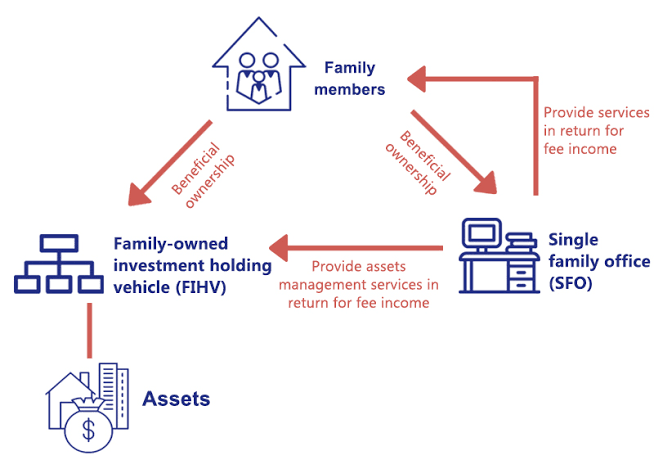
Part IV: Technical Architecture of Cross-Border Structural Nodes
Executing a polycentric family office strategy requires orchestrating specialized corporate and legal entities across borders. Each node must be meticulously integrated to eliminate double taxation, satisfy global substance requirements, and maintain a clear chain of ownership.
4.1 The Singapore Trust and Treasury Layer
For families establishing a master governance layer in Singapore, the architecture typically relies on a combination of a Private Trust Company (PTC) and an operating investment holding structure holding 13O or 13U status.
- The PTC Advantage: A Singapore PTC allows family members to retain governance control over assets without personal ownership exposure. The PTC acts as the corporate trustee for a series of discretionary family trusts. Because the board of the PTC can include family advisors and trusted independent professionals, it ensures continuity without triggering the forced heirship or probate issues of civil law jurisdictions.
- The 13U (Enhanced Tier Fund) Engine: To manage global liquid portfolios, the 13U vehicle requires a minimum asset under management (AUM) threshold of S$50 million at the time of application. Crucially, the 13U scheme allows for multi-tiered structures, meaning the fund entity itself can be a master fund holding various special purpose vehicles (SPVs) globally. It provides a absolute exemption from Singapore profits tax on “qualifying funds” derived from designated investments—which encompasses equities, bonds, derivatives, and private equity allocations globally.
4.2 The Hong Kong Direct Investment Engine
To capture high-alpha growth within Mainland China and the broader Asia-Pacific region, families route capital down from the Singapore master trust into a Hong Kong Family-Owned Investment Holding Vehicle (FIHV).
- The FIHV Concession Scheme: Under Hong Kong’s tax framework, an eligible FIHV managed by a single-family office (SFO) in Hong Kong is entitled to a 0% profits tax rate on qualifying transactions. These include transactions in shares, debentures, futures contracts, leveraged foreign exchange contracts, and interests in private companies.
- The Single-Family Office Licensing Exemption: The Hong Kong Securities and Futures Commission (SFC) maintains a highly operational, bright-line exclusion for single-family offices. An SFO does not require an SFC asset management license (Type 9) if it provides asset management services exclusively to a single family group (defined broadly across a single lineage including spouses, siblings, and lineal descendants). This avoids the heavy compliance overhead of a public retail asset manager while retaining complete institutional flexibility.
4.3 The Luxembourg Institutional Interface
For cross-border public market execution in Europe, integrating a Luxembourg Reserved Alternative Investment Fund (RAIF) or an un-regulated Special Limited Partnership (SCSp) provides an ideal institutional wrapper.
- The SCSp Structuring Choice: The Luxembourg SCSp functions identically to a Delaware or Cayman limited partnership, featuring complete tax transparency and contractual flexibility. It does not require direct authorization from the Luxembourg regulator (CSSF) if it is overseen by an Authorized Alternative Investment Fund Manager (AIFM). This setup allows the family office to launch co-investment vehicles alongside European sovereign wealth funds or tier-one private equity houses, utilizing a vehicle that institutional counterparties recognize instantly.
Part V: The Macro Context — Why This Shift Is Structural, Not Cyclical
Some observers characterize the massive capital flows toward polycentric structuring as a brief, defensive reaction to localized macroeconomic pressures. Data points to a much deeper, permanent re-engineering of global private wealth networks.
5.1 Four Structural Drivers
I. Geopolitical Fragmentation
The era of hyper-globalization has been replaced by a persistent multi-polar world order, characterized by competing economic blocs, supply chain regionalization, and strategic industrial decoupling. Capital can no longer operate under the assumption that a Western asset protection strategy will function seamlessly within Eastern markets, or vice-versa. Polycentric structures allow a family to hold distinct “passports” for its capital, formatting each investment to align with the specific geopolitical ecosystem it inhabits.
II. Regulatory Proliferation
The global implementation of the Common Reporting Standard (CRS), FATCA, the EU’s continuous anti-tax avoidance directives (ATAD III), and the sweeping rollout of the OECD’s Pillar Two global minimum tax framework have collectively dismantled traditional, shell-company tax arbitrage. Modern compliance demands genuine operational substance. By building specialized hubs with real physical footprints and local professional staff, families achieve true structural resilience, ensuring they can absorb regulatory evolutions without disrupting their entire core holding architecture.
III. The Intergenerational Wealth Velocity
We are in the midst of the largest intergenerational wealth transfer in human history, with over $84 trillion projected to shift down to next-generation leaders over the next two decades. The incoming stewards of private capital are fundamentally different from their predecessors: they are hyper-globalized, digitally native, and strongly focused on direct venture investments and structured sustainability initiatives. They reject the rigid, single-jurisdiction legacy frameworks established in the 1980s and 1990s, preferring instead highly modular, technology-enabled networks that match their global lifestyles.
IV. Technological Enablement
The operational viability of a family office managing entities across Singapore, Hong Kong, Luxembourg, and Delaware simultaneously has been transformed by technology. The maturation of specialized Regulatory Technology (RegTech) platforms, AI-driven compliance monitoring tools, and secure cross-border ledger systems has drastically reduced the administrative friction and overhead costs traditionally associated with multi-jurisdictional networks.
5.2 The Crisis of Institutional Trust
At the heart of the polycentric movement lies a rational, structural response to a broader global deficit in institutional trust. Sophisticated wealth holders have recognized that no single nation-state can consistently guarantee an unyielding combination of rapid market growth, bulletproof asset protection, total fiscal stability, and operational privacy.
This modern trust deficit is driven by observable global precedents:
- The swift, unilateral reconfiguration of banking regulations and capital controls during localized financial crises.
- The unexpected shifting of international political alliances, resulting in sudden asset freezes or aggressive expropriation risks for exposed capital.
- Changing domestic political climates that view concentrated private capital as a primary target for retroactive wealth taxation and aggressive asset disclosures.
The solution implemented by advanced wealth architects is clear: stop searching for a single, flawless country. Instead, build a decentralized corporate network designed to survive the vulnerabilities of any individual hub.
5.3 The Asian Financial Ecosystem — A Dynamic Bi-Network
Within this global fragmentation, the Asia-Pacific region stands as an essential vector for long-term wealth preservation and capital growth. However, accessing this economic corridor requires deep structural nuance.
| HONG KONG (The Market Engine) | SINGAPORE (The Trust Anchor) |
| * Direct access to GBA & Mainland China * Unrivaled public IPO market velocity * Deep private venture tech corridors | * Sovereign Neutrality * Elite Global Trust Statutes * Multi-Tier Treasury Systems |
The old narrative positioned Hong Kong and Singapore as fierce competitors locked in a zero-sum battle to become Asia’s premier wealth hub. Modern structural analysis reveals they have evolved into an interconnected, complementary bi-network.
Hong Kong acts as the ultimate market engine—the primary gateway for liquidity capture, equity capital generation, and unhindered financial connectivity to the massive industrial corridors of Mainland China. Singapore acts as the ultimate trust anchor—the safe corporate fortress for long-term governance, defensive treasury buffering, and neutral cross-border dispute isolation.
The most resilient families do not choose between them; they integrate both into a coordinated, multi-hub operational matrix.
Part VI: Operationalizing the Architecture — Step-by-Step Implementation
Building a functional polycentric architecture requires a phased, disciplined engineering process. The following sequence outlines the standard operational path to unbundle a centralized single-country structure into an integrated multi-hub framework.
1. Comprehensive Asset Mapping and Jurisdictional Risk Audit:
Phase 1: Diagnostic.
Conduct a detailed audit of all global holdings, segregating assets into three distinct functional buckets: core liquid wealth, active high-alpha growth investments, and regional operating assets. Map every entity against its native tax, probate, and geopolitical risk exposures to identify single points of failure.
2.Establishment of the Master Governance Layer:
Phase 2: The Core Anchor.
Launch the primary governance hub in a highly stable, neutral territory (e.g., Singapore). Establish the Private Trust Company (PTC) and execute the Master Discretionary Trust deeds. Draft and ratify the formal family council charter, legally decoupling ultimate ownership from active operational decision-making.
3.Incorporation and Regulatory Clearance of Deployment Nodes:
Phase 3: Operational Vehicles.
Incorporate the underlying specialized investment entities in targeted growth corridors. Establish the Family-Owned Investment Holding Vehicle (FIHV) in Hong Kong to capture East Asian private equity and public listings. Secure all necessary regulatory exemptions, such as single-family office licensing exclusions from local securities commissions.
4.Structural Capitalization and Implementation of Intercompany Firewalls:
Phase 4: Fluid Integration.
Execute the legal transfer of asset titles down to the respective specialized nodes. Implement the intercompany dividend routing mechanisms, contractual loan agreements, and transfer pricing protocols needed to allow capital generated by growth nodes to flow securely back up to the master treasury buffer without triggering tax friction.
Part VII: Forward Look — Trends Shaping 2026 and Beyond
As family offices look toward the horizon, the operational frameworks governing cross-border wealth architecture will be heavily influenced by five emerging macroeconomic and technological vectors.
7.1 Regulatory Convergence vs. Tactical Divergence
We are entering a dual-speed regulatory environment. In areas concerning global transparency—such as automated corporate registry sharing, AML enforcement data exchanges, and beneficial ownership disclosure—international standards will continue to rapidly converge. The ability to hide capital in opaque, un-reported jurisdictions has ceased to exist.
Simultaneously, sharp divergence will accelerate along geopolitical and industrial lines. Competing economic blocs will implement radically different regulatory frameworks for strategic growth sectors, such as data privacy, AI compute infrastructure, critical minerals, and green energy technologies. Family architectures must remain highly modular, allowing separate corporate nodes to comply independently with localized, conflicting regulatory environments without paralyzing the broader global structure.
7.2 The Automation of Multi-Hub Compliance via RegTech
The administrative friction of managing multiple distinct entities across several time zones is being actively solved by advanced Regulatory Technology (RegTech). The integration of AI-driven compliance engines allows modern family office infrastructure to:
- Automate cross-border tax transparency filing obligations across multiple nodes simultaneously.
- Execute continuous, real-time AML and Know-Your-Customer (KYC) screening for international co-investment counterparties.
- Monitor localized economic substance thresholds, ensuring payroll hours, local operating expenditures, and employee counts remain perfectly aligned with statutory minimums across every individual node.
This automation shifts the family office focus from basic administrative survival to high-level strategic allocation.
7.3 Next-Generation Sovereign Mobility Strategy
The rising generation of wealth stewards is decoupling the concept of personal physical residency from corporate structuring. They view citizenship and physical residency as modular components that can be optimized alongside corporate architecture.
This has driven the adoption of multi-tiered sovereign mobility portfolios—combining institutional family office hubs (like Singapore or Hong Kong) with secondary residency and citizenship allocations across Europe, the GCC, or the Caribbean. This ensures that if physical mobility restrictions or localized civil shocks occur, the family principal retains immediate, legal entry rights to the specific territories housing their primary capital nodes.
7.4 The Evolution of Multi-Jurisdictional Professional Networks
The traditional model of relying on a single, localized private bank or a single domestic law firm to oversee a family’s global legacy is structurally insufficient for polycentric management.
The market is witnessing a rapid re-engineering of the professional advisory ecosystem, marked by the rise of Structural Integrators—elite, independent cross-border advisory collectives that specialize exclusively in designing, executing, and continuously auditing the intersection points between disparate legal, tax, and fiduciary frameworks globally. Family office leadership will increasingly evaluate external partners based on their systemic cross-border fluency rather than their localized technical expertise.
7.5 Structural Agility as the Ultimate Currency
The defining characteristic of the most successful family architectures over the next decade will be Structural Agility. The pace of global transformation means that a country that appears completely stable and optimized today could introduce adverse regulatory or political frameworks within a five-year horizon.
Resilient structures are no longer built as permanent monuments; they are engineered as fluid networks. By keeping asset holding channels nimble, embedding flexible cross-border merger and redomiciliation provisions into corporate charters, and maintaining clear pathways for liquid capital migration, sophisticated wealth networks ensure they can pivot their structural footprint ahead of global macroeconomic shocks.
Conclusion: Engineering the Unyielding Legacy
In the current global economic landscape, the traditional focus on geographic destination has been superseded by a mandate for structural architecture. The foundational question for wealth creators has evolved:

The polycentric model recognizes that resilience is not found by anchoring to any single point on Earth, but by managing the relationship between multiple places, multiple functions, and multiple generations. By systematically unbundling core holding structures, utilizing specialized vehicles like Hong Kong FIHVs and Singapore PTCs for their exact functional strengths, and wrapping the entire ecosystem in an agile corporate framework, private capital can effectively insulate itself from systemic volatility.
True endurance no longer requires a flawless world. It requires an architecture robust enough to turn global fragmentation into an absolute, structural fortress.